

by Anastassia Grankina
Share
by Anastassia Grankina
Share
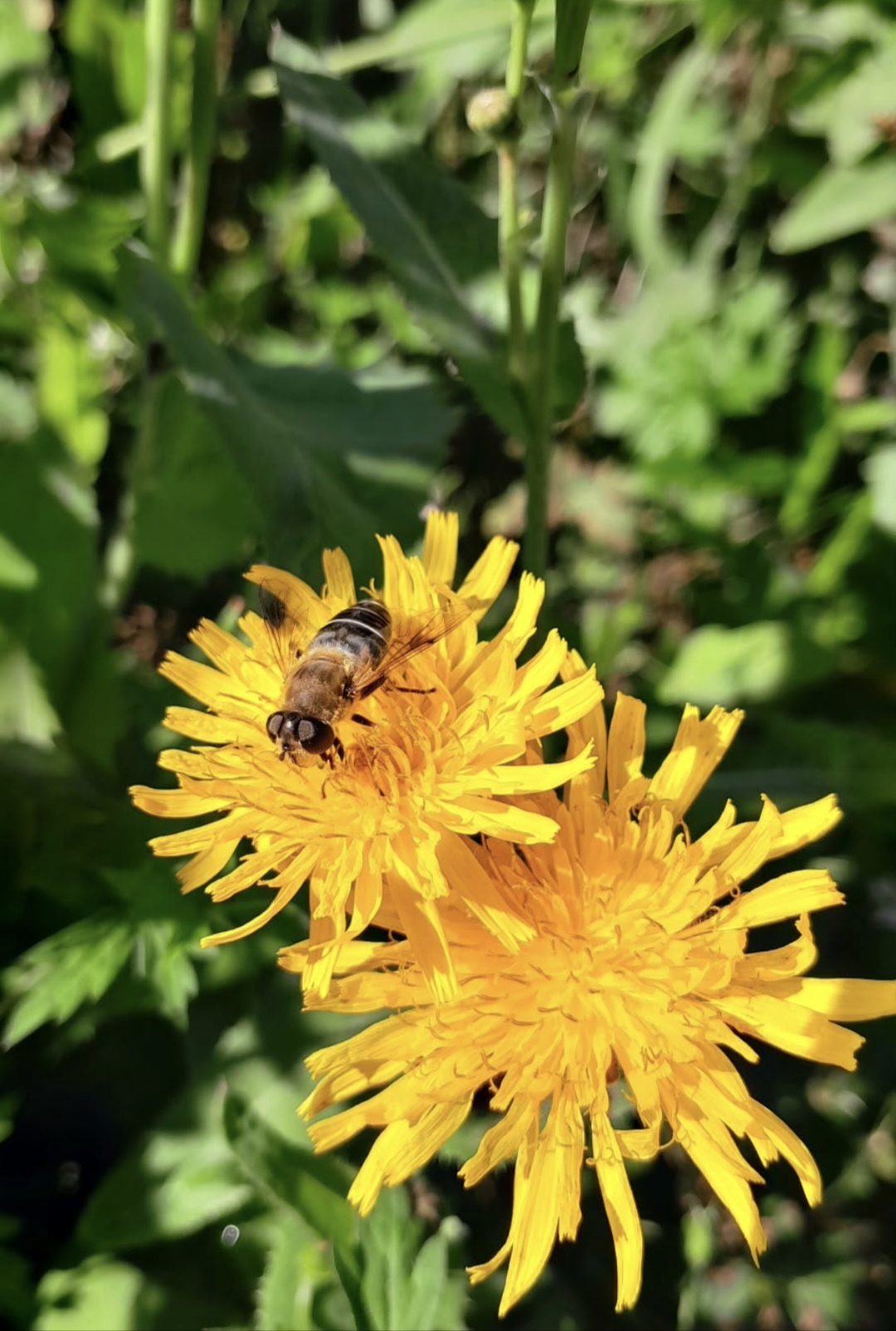
“From bud to bloom – a reminder that progress is a journey, not a destination.” Unknown
Sitting down to write this first blog, I started reflecting back on our last 9-year journey as a family…as a special needs family. It has been a truly crazy journey with many ups and downs, unique challenges, times of despair, but also moments of true, deep happiness. This journey continues as my son continues to change, improve and learns to navigate through this world (hopefully!) more and more independently.
Three years ago, right before I came across Movement Lesson, we were at a point where my son was attending so many therapies and they took a lot of effort but were not resulting in much improvement. Specialists were often giving up on him or were plainly telling me they had no idea how to help him. While starting to feel despair creep in, I felt deep down in my heart that my son had a lot of potential and intelligence and there absolutely had to be something else that would help him. I stopped measuring him against the never-ending milestones provided by therapists, as I simply got lost in tracking all the delays – physical, verbal, behavioural, and visual. I reached a point where I was just exhausted researching and reading literature about Cerebral Palsy in three different languages, desperately looking for some answers or ideas, on how to help my child. At times, all information seemed so general, and at the same time so detailed and complex, but not relevant at all to my son’s condition. I felt like all my reading and research was a complete waste of time, but I couldn’t believe that there was no other therapy or method that could explain his challenges and delays. Most importantly, I couldn’t accept that there was nothing that could be done to help.
When I came across Movement Lesson and Michelle Turner’s books, I was fascinated by her understanding how every child is unique and needs to follow a different therapy routine. It was also a breath of fresh air to hear her say that assessment is not about comparison but is about understanding every child and his needs. When I became brave enough to send her a few videos of my son for evaluation, she sent me back a few videos sharing her opinion and advice regarding what could help him. She was so understanding and provided so much excellent and relevant (finally!) feedback. Her feedback did not focus on what he was lacking, but instead, summarized concrete steps on how to slowly start to help him initiate, enhance and improve functional movement that could later transform into real skills.
One sentence she said stuck with me for all these years (she repeated it multiple times too!) – “your son works too hard.” The first time I heard this sentence, it hit me like a ton of bricks. It made me realize and see that my son has such a difficulty moving freely, but I force him to work harder and muscle his way through movement every day by taking him to all these therapies and doing endless exercises that might help him to build muscle, but they do not create functional and optimal movement that he needs to gain real skills and independence in everyday life.
This conversation opened my eyes to seeing my son differently. I realized how incredibly hard-working and talented he is and has been all this time. Moreover, it led to a personal transformation which marked the beginning of our Movement Lesson journey – a journey full of hope and excitement for the future.
Movement Lesson journey with my son has been truly transformational. I am so grateful for the opportunity to learn this method and to learn and understand movement. With time, I hope to continue to improve my son’s quality of life and to help other children and their families embark on the fascinating journey of Movement Lesson with belief and hope for a positive future ahead.
I want to finish with an excerpt from the poem Welcome to Holland by Emily Perl Kingsley, describing the life of special needs families (full poem is below my post for your convenience).
“The important thing is that they haven’t taken you to a horrible, disgusting, filthy place, full of pestilence, famine and disease. It’s just a different place.
So you must go out and buy new guidebooks. And you must learn a whole new language. And you will meet a whole new group of people you would never have met.”
This is what Movement Lesson journey has been for me. Yes, I had to go and buy “new guidebooks” and learn “a whole new language” and meet people “I would never have met.” And at first, this path was difficult and scary. But now, it is rewarding and full of hope and transformation.
As Emily Kingsley concludes,
“…if you spend your life mourning the fact that you didn’t get to Italy, you may never be free to enjoy the very special, the very lovely things… about Holland.”
Full poem can be found below.
Welcome to Holland
By: Emily Perl Kingsley
I am often asked to describe the experience of raising a child with a disability – to try to help people who have not shared that unique experience to understand it, to imagine how it would feel. It’s like this…
When you’re going to have a baby, it’s like planning a fabulous vacation trip – to Italy. You buy a bunch of guide books and make your wonderful plans. The Coliseum. The Michelangelo David. The gondolas in Venice. You may learn some handy phrases in Italian. It’s all very exciting.
After months of eager anticipation, the day finally arrives. You pack your bags and off you go. Several hours later, the plane lands. The stewardess comes in and says, “Welcome to Holland.”
“Holland?!?” you say. “What do you mean Holland?? I signed up for Italy! I’m supposed to be in Italy. All my life I’ve dreamed of going to Italy.”
But there’s been a change in the flight plan. They’ve landed in Holland and there you must stay.
The important thing is that they haven’t taken you to a horrible, disgusting, filthy place, full of pestilence, famine and disease. It’s just a different place.
So you must go out and buy new guide books. And you must learn a whole new language. And you will meet a whole new group of people you would never have met.
It’s just a different place. It’s slower-paced than Italy, less flashy than Italy. But after you’ve been there for a while and you catch your breath, you look around…. and you begin to notice that Holland has windmills….and Holland has tulips. Holland even has Rembrandts.
But everyone you know is busy coming and going from Italy… and they’re all bragging about what a wonderful time they had there. And for the rest of your life, you will say “Yes, that’s where I was supposed to go. That’s what I had planned.”
And the pain of that will never, ever, ever, ever go away…because the loss of that dream is a very, very significant loss.
But…if you spend your life mourning the fact that you didn’t get to Italy, you may never be free to enjoy the very special, the very lovely things… about Holland.
1987 by Emily Perl Kingsley. All rights reserved.